

Swiss health insurance after moving, the 90 day rule and 7 common mistakes to avoid

Jens Herbst
CEO BoVita
Read time
12 min
Published
Feb 3, 2026
Updated
Jun 15, 2026
Quality
Verified
After moving to Switzerland you generally must take out mandatory basic health insurance within three months. Coverage is retroactive from your date of residence and premiums are due retroactively too. The key is not to wait, compare early, choose the right model and deductible, and provide proof to your municipality on time.
«Jede Person mit Wohnsitz in der Schweiz muss sich innert drei Monaten nach der Wohnsitznahme oder der Geburt in der Schweiz für Krankenpflege versichern oder von ihrem gesetzlichen Vertreter beziehungsweise ihrer gesetzlichen Vertreterin versichern lassen.»
Key Takeaways
- 01Three month deadline, but premiums are retroactive, waiting is not free
- 02Choose model and deductible first, then consider supplemental insurance
- 03Collect documents early so you can sign up fast online
- 04With a checklist you can finish this in about 30 minutes
Health Insurance After Moving to Switzerland, Word Kit (90-Day Plan, Model Comparison, Application Templates)
Editable Word kit for basic health insurance after moving: KVG basics explained simply, 90-day plan week-by-week, model comparison (Standard/family doctor/HMO/telmed/pharmacy), ready-to-send application template with master data table, insurer-switch template (deadline 30 November), special cases (students, cross-border workers, S1, family reunification) and premium reduction (IPV). Works in Word, Pages and Google Docs.
01
The 90 Day Rule, What It Really Means
After registering your residence in Switzerland, you generally have three months to enroll in mandatory basic health insurance (KVG). This deadline starts from the day you officially become resident.
This sounds relaxed, but it is not quite. Whether you sign up on day one or day ninety, your insurance coverage is retroactive from the day you became resident. That means you owe premiums going back to that date.
Another common misunderstanding is thinking you can move to Switzerland without insurance and decide later. That is not correct. Basic health insurance is mandatory, with only rare exceptions.
So the 90 day period is not a grace period. It is time to organize. Use it to compare and choose the right solution for you. But waiting does not save money.
02
Retroactive Coverage, Why Many Misunderstand This
Many people are surprised when the first invoice arrives. It does not just cover the current month. It goes back to the day you registered with the municipality.
This is not an error. It is how the system works. Coverage starts retroactively so you are protected from day one. If you visit a doctor or go to hospital during this time, the insurance covers costs according to standard rules.
For you this means there is no advantage to waiting in the first few weeks. You pay the same premiums in the end, but you have less time to compare and risk making a poor decision under pressure.
That is why it pays to sign up early. Not because it is cheaper, but because you then have peace of mind and can focus on other things.

Get started now
Health Insurance After Moving to Switzerland, Word Kit (90-Day Plan, Model Comparison, Application Templates)
Editable Word kit for basic health insurance after moving: KVG basics explained simply, 90-day plan week-by-week, model comparison (Standard/family doctor/HMO/telmed/pharmacy), ready-to-send application template with master data table, insurer-switch template (deadline 30 November), special cases (students, cross-border workers, S1, family reunification) and premium reduction (IPV). Works in Word, Pages and Google Docs.
03
Model and Deductible, How to Choose Correctly
The two most important decisions at the start are the insurance model and the deductible.
Models:
- Standard: You can choose any doctor freely. Most flexibility, highest premium.
- Family doctor model: You always visit your family doctor first. They refer you if needed. Cheaper than standard.
- HMO: You go to a specific health center. Affordable, but less flexibility.
- Telemedicine: First contact is a hotline or app. Very cheap, but you must call there first.
If you are young and healthy and rarely see a doctor, HMO or telemedicine are often the best choice. If you regularly need specific specialists, the family doctor model is a good compromise.
Deductible:
The deductible is the amount you pay yourself each year before insurance kicks in. It ranges from CHF 300 to CHF 2500.
- High deductible: Lower premium, but you pay a lot yourself if you get sick.
- Low deductible: Higher premium, but less risk.
For healthy people, the highest deductible is often sensible. But calculate before you decide.

04
Supplemental Insurance, When It Makes Sense and When It Does Not
Besides mandatory basic insurance, there are supplemental insurances. These are optional and cover things not included in the basic package.
Common supplemental insurances:
- Hospital insurance (semi-private/private): Private room, free choice of doctor in hospital.
- Outpatient supplemental: Glasses, alternative medicine, prevention.
- Dental insurance: Treatments, corrections.
When is it worth it?
For most young, healthy people, supplemental insurances are not urgent. Basic insurance already covers a lot. But if you have specific needs, for example regular physiotherapy or alternative medicine, supplemental insurance can make sense.
Important to know:
Supplemental insurances often have health questions and can reject you. That is why it sometimes makes sense to get supplemental insurance early, before health issues arise.
For the start I recommend: First complete the basic insurance properly, then think in peace about whether supplemental coverage is necessary.
05
Documents and Process, How to Sign Up Cleanly
To register with a health insurer, you typically need the following documents:
- Valid ID (passport or national ID)
- Swiss address (residence confirmation or rental contract)
- Residence status or confirmation from the municipality
- IBAN for premium payments
Most insurers offer online registration. You upload the documents, choose model and deductible, and receive confirmation shortly after.
Process:
- Choose 2 to 3 insurers to compare
- Use comparison sites like comparis.ch or priminfo.admin.ch
- Complete the process online
- You receive a policy by mail
- Provide proof of insurance to your municipality (if required)
The municipality usually checks whether you are insured. If you do not provide proof, they can assign you to an insurer. You want to avoid that because then you have no choice.
06
The 7 Most Common Mistakes and How to Avoid Them
1. Waiting too long
The three month deadline passes quickly. Those who wait decide under pressure and make more mistakes.
2. Not comparing
Premiums vary widely. Comparing can save several hundred francs per year.
3. Choosing the wrong model
If you rarely see a doctor, you do not need the standard model. If you regularly need specialists, do not choose HMO.
4. Misjudging the deductible
A high deductible saves on premiums, but only if you truly never get sick. Calculate first.
5. Getting supplemental insurance too early or too late
Some sign up for everything at once even though they do not need it. Others forget until they are rejected.
6. Forgetting the proof of insurance
The municipality requires proof. If you do not provide it, you get assigned.
7. Not watching cancellation deadlines
If you want to switch, you must observe deadlines. A late letter can cost you a year.
07
Local Notes for Aarau, Wohlen and St. Gallen
Aarau
The residents office in Aarau checks proof of insurance when you register. It helps to bring confirmation from your insurer or submit it soon after. Major insurers are well represented in Aarau, many have local agencies.
At BoVita in Aarau all formalities are transparently handled. We are happy to answer questions about health insurance, even though we do not sell insurance ourselves.
Wohlen
In Wohlen the process is similar. The municipality expects proof of insurance. If you sign up online, it often takes just a few days to receive confirmation.
St. Gallen
St. Gallen has a wide range of insurers. For students and young professionals there are often special offers. The city is used to fast processes since many newcomers arrive here.
At BoVita in St. Gallen we are happy to help you settle in after your move.
Ready for your new home in Aarau?
Furnished shared rooms from CHF 620/month, flexible deposit options, quickly available.
Health Insurance After Moving to Switzerland, Word Kit (90-Day Plan, Model Comparison, Application Templates)
Editable Word kit for basic health insurance after moving: KVG basics explained simply, 90-day plan week-by-week, model comparison (Standard/family doctor/HMO/telmed/pharmacy), ready-to-send application template with master data table, insurer-switch template (deadline 30 November), special cases (students, cross-border workers, S1, family reunification) and premium reduction (IPV). Works in Word, Pages and Google Docs.
Frequently Asked Questions
5 questions answered
Generally you must take out mandatory basic health insurance within three months of becoming resident. Only check exemptions if you truly fall into a special category.
Sources & Methodology
6 verified sources
- 01FOPH, mandatory health insurance (German)bag.admin.ch
- 02priminfo.admin.ch, official premium calculatorpriminfo.admin.ch
- 03Federal Office of Public Health (FOPH)bag.admin.ch
- 04ch.ch, insurancech.ch
- 05State Secretariat for Migration (SEM)sem.admin.ch
- 06
About the author: Jens Herbst
Founder and Managing Director, BoVita
Jens Herbst came to Switzerland as a young professional himself and knows first hand how hard affordable housing is to find. That is exactly why he founded BoVita. Today BoVita operates furnished housing at four locations and runs its own property management for rooms, flatshares and co-living. What you read in these articles comes from day to day operations, not from second hand sources.
Related Articles
You might also like

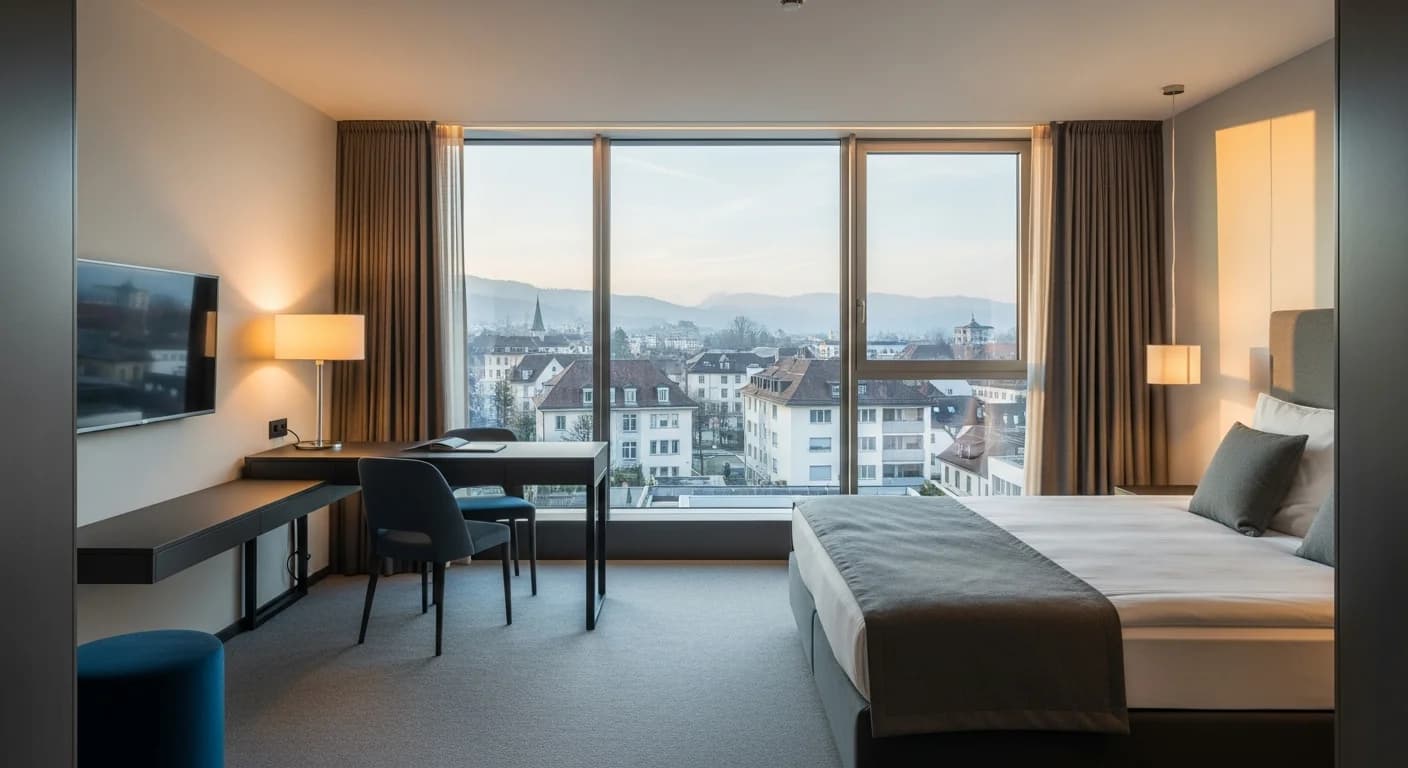
Available furnished rooms in Aarau
Central location in Aeschbach quarter, right by the train station and cantonal hospital. Perfect for professionals and students.
Other locations: